


The market for hybrids and electrified vehicles is growing fast, and drivers in Hollywood, FL have several practical Toyota options to consider. This guide walks you through the best Toyota hybrid and plug‑in choices for 2026, how charging works locally, the financing incentives available, and simple maintenance tips.

The market for hybrids and electrified vehicles is growing fast, and drivers in Hollywood, FL have several practical Toyota options to consider. This guide walks you through the best Toyota hybrid and plug‑in choices for 2026, how charging works locally, the financing incentives available, and simple maintenance tips. We cover standout models like the Prius, RAV4 Prime, and Corolla Hybrid, explain charging infrastructure in and around Hollywood Beach, and point you toward local incentives and service resources. Read on and you’ll feel ready to compare models, estimate charging needs, and start the buying process with confidence. The goal is practical, usable information you can act on this year—whether you’re comparing trims, planning a home charger installation, or scheduling your first hybrid service appointment.
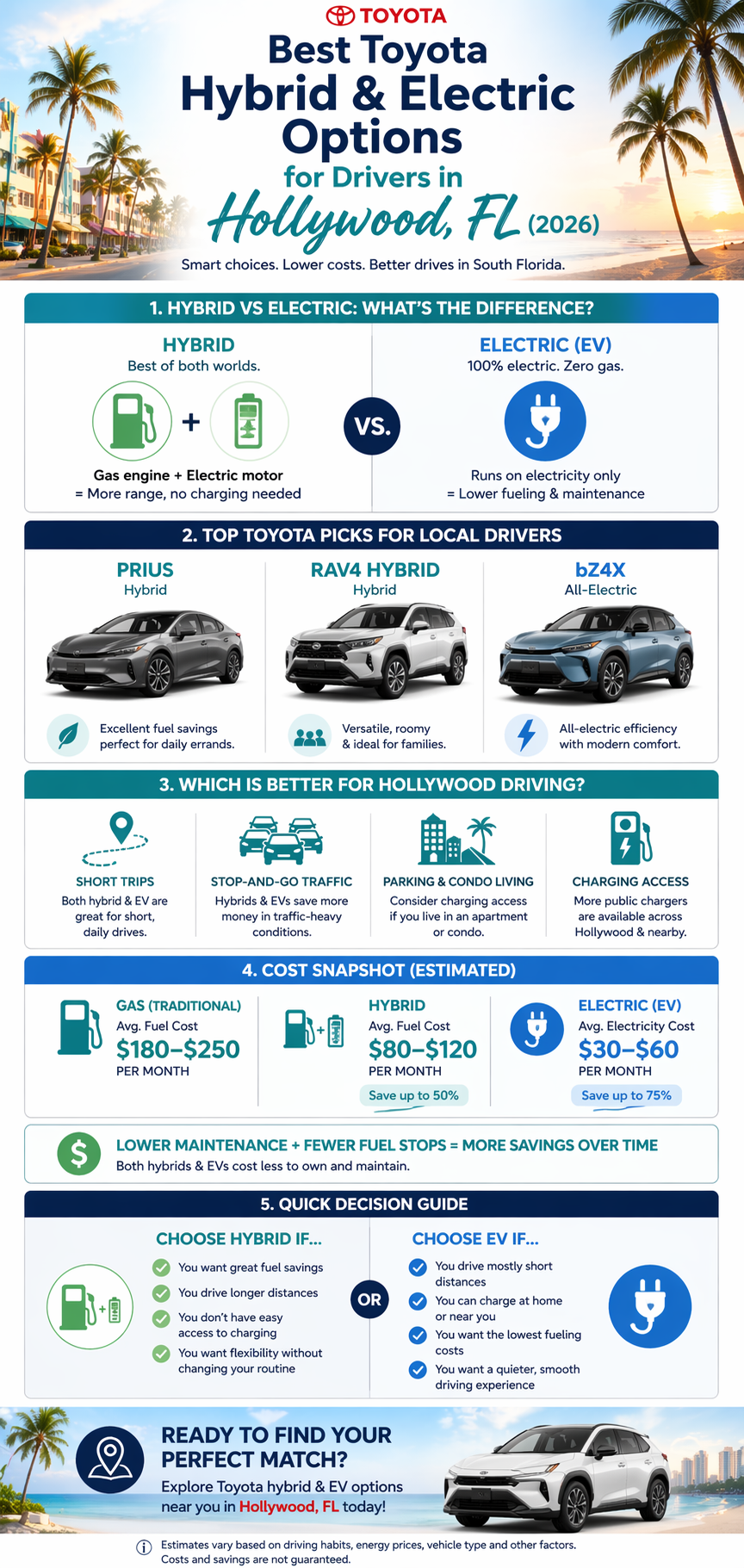
In 2026 Toyota’s electrified lineup gives Hollywood drivers practical choices for different needs — from fuel‑sipping commuters to versatile plug‑in SUVs. The Prius, RAV4 Prime, and Corolla Hybrid stand out for efficiency, daily usability, and modern tech. Each model reduces emissions while delivering a comfortable, tech‑ready driving experience for the local market. Depending on your priorities — upfront price, all‑electric driving capability, cargo space, or towing needs — one of these models will likely suit your lifestyle without requiring a steep learning curve.
The Prius remains a benchmark for fuel economy, achieving up to about 56 mpg combined in EPA estimates and including Toyota Safety Sense driver‑assist features. The RAV4 Prime is a plug‑in hybrid SUV that offers roughly 42 miles of electric‑only range and a total driving range exceeding 600 miles — a strong option if you want short all‑electric trips plus long range for road trips. The Corolla Hybrid delivers compact practicality with around 53 mpg combined, making it ideal for city driving and daily commutes. All three models come with modern infotainment and connectivity features to keep you connected on the road. Optional packages and trim choices affect comfort, cargo flexibility, and available driver assistance features, so compare levels when you test drive to ensure the configuration matches your needs.
Toyota’s 2026 lineup separates into two clear categories: full hybrids (Prius, Corolla Hybrid) that automatically blend gasoline and electric power without plugging in, and plug‑in hybrids (RAV4 Prime) that offer a measurable electric‑only range and require external charging to use that full EV capability. Knowing how you drive — daily mileage, charging access, and typical trips — will help you pick the right type for your lifestyle. For many commuters who average under the plug‑in’s electric range, a plug‑in can cover most daily miles on electricity; for drivers without dependable charging access, a standard hybrid offers simpler ownership with consistent fuel savings.
Picking the right charging setup makes owning a hybrid or plug‑in much easier. Whether you rely mostly on home charging or need public stations for longer outings, matching charging options to your routine simplifies ownership and keeps costs predictable. Consider practical factors like available parking at home, proximity to public chargers near work or shopping, and whether your building or HOA allows charger installations before committing to a plug‑in model.
Public chargers generally offer Level 2 and DC fast options that can replenish a battery much faster than a standard home outlet, but they may have fees and availability constraints. Home charging — usually a Level 2 wall unit installed at your residence — is slower than DC fast but conveniently fills your car overnight and lowers the need to visit public stations frequently. Most drivers find a mix of home charging for daily use and public fast charging for longer trips works best. If you travel often, check the availability of DC fast chargers along your regular routes; for primarily local driving, a well‑planned home charger almost always delivers the best value and convenience.
Research highlights that for broad public deployments, DC fast chargers play a bigger role in enabling longer trips and quicker turnarounds compared with Level 2 units.
Your charging choices shape daily convenience and the share of electric miles you get. Regular access to charging lets plug‑in owners maximize electric driving; for standard hybrids, efficient driving habits and occasional charging (if applicable) improve fuel economy. Frequency and charging speed also influence battery temperatures and long‑term performance, so adopting recommended charging practices helps preserve range and battery health. In practice, combining scheduled home charging with occasional public fast sessions for longer outings will minimize downtime and often lower total cost of ownership.
Convenient public charging near popular spots like Hollywood Beach Broadwalk means you can top up while you walk the boardwalk or run errands. Several Level 2 and DC fast chargers serve the area, making short visits and longer stays easier for EV and plug‑in owners. For visitors, knowing charger locations near restaurants, hotels, and shopping corridors reduces range anxiety and helps plan multi‑stop outings without surprise detours.
Use charging apps and map tools to find nearby stations, check real‑time availability, compare charging speeds, and handle payment. Apps also include user reviews and connection types so you can confirm compatibility before you go. When you arrive, follow posted instructions at each station and ensure your connector matches the charger type. Tip: save commonly used stations to favorites in your chosen app to speed future searches and get notified of status changes or maintenance outages.
Hollywood Beach Broadwalk supports a mix of Level 2 and DC fast chargers at strategic points for beachgoers and residents. Availability varies by time and day, so checking a charging map before you leave helps avoid surprises. Multiple charger types mean most Toyota plug‑in and hybrid drivers will find compatible options nearby. If you plan an extended visit, look for stations with multiple plugs or nearby parking alternatives in case your first choice is occupied.
Smart charging habits extend battery life and reduce costs. A few straightforward practices go a long way toward keeping your Toyota running efficiently and reliably. Small changes in routine and attention to charging settings often yield the best balance between convenience and long‑term battery health.
Charging during off‑peak hours — often overnight — usually lowers your electricity bill and eases grid demand. Many utilities offer time‑of‑use rates or incentives for off‑peak charging, so scheduling your charge cycle to those times is both economical and grid‑friendly. If your utility provides a smart charger rebate or rate, enroll and schedule accordingly to capture savings and reduce stress on the local grid during peak periods.
Studies show that time‑of‑use pricing and incentive programs can successfully shift charging to off‑peak hours, benefiting drivers and the grid alike.
Off-Peak EV Charging Incentives & Time-of-Use Pricing
Research into time‑of‑use pricing and incentive programs found these tools effective at encouraging off‑peak charging and helping mitigate grid peaks — especially when combined with smart charging controls.How Can Drivers Maximize Charging Convenience and Battery Life?
Use smart‑charging features to schedule charges, monitor battery health, and avoid keeping the battery at 100% for prolonged periods unless needed for a trip. Routine inspections, keeping connections clean, and following software update recommendations will help maintain battery performance. When in doubt, consult your dealer or service center for best practices tailored to your model. Additionally, if you have access to a charger with adjustable charge limits, setting a daily cap (for example, 80–90%) can balance usable range and battery longevity for most drivers.
Ready to Start Saving in 2026?
Explore our Toyota EV inventory or talk to our Hollywood team today.
Which Financing Options and Incentives Are Available for Toyota Hybrid and Electric Vehicles in Florida in 2026?
Financing and incentive programs in 2026 can make electrified Toyotas more affordable. Combining manufacturer offers, local dealer specials, and state or utility incentives typically yields the best results for buyers and lessees. Before you sign, compare lease and loan offers side by side and evaluate total monthly cost, expected miles, and potential incentives that reduce initial cost or installation fees for home chargers.
What State and Local Incentives Support Hybrid Car Purchases in Florida?
Florida and some local jurisdictions offer incentives that may include tax credits, rebates, or grants for qualifying hybrid and electric vehicles, and some programs also support home charger installation. Availability and amounts vary, so checking current state and local resources will help you capture every applicable benefit. Contact your utility and local government websites for up‑to‑date program details, and ask your dealer which incentives they routinely apply to reduce your out‑of‑pocket cost at purchase.
How Can Hollywood Drivers Access Toyota Financing and Special Offers?
Toyota of Hollywood offers tailored financing, lease options, and special promotions to fit different budgets. Visit the dealership’s finance page or speak with the finance team to review current offers, incentives, and payment plans that match your needs. Bring documentation of any external rebates or utility incentives to speed processing and ask your salesperson how those programs integrate with manufacturer incentives to avoid missing combined savings.
How Should Hollywood Drivers Maintain and Service Their Toyota Hybrid and Electric Vehicles?
Following recommended maintenance keeps hybrid and plug‑in vehicles safe and efficient. A proactive approach prevents problems and preserves resale value. Scheduling routine inspections and servicing early reduces the risk of larger repairs later and helps keep warranty coverage intact.
What Are the Recommended Maintenance Practices for Toyota Hybrids and EVs?
Regular service items include battery health checks, scheduled software updates, brake and tire inspections, and routine fluid and filter replacements as specified by Toyota. Sticking to the manufacturer’s service schedule and watching for any dashboard alerts will help catch issues early and maintain peak performance. Keep service records and ask your technician for a clear maintenance checklist so you can track intervals between visits, especially for high‑use or ride‑share vehicles where wear rates differ from typical ownership.
Where Can Drivers Find Genuine Toyota Parts and Service in Hollywood, FL?
Genuine Toyota parts and service are available at Toyota of Hollywood, where technicians trained on hybrid and plug‑in systems handle repairs and routine maintenance. Using OEM parts and certified service helps protect warranty coverage and vehicle longevity. If you need mobile service or loaner vehicles during longer repairs, ask the service advisor about available options to minimize disruption to your routine.
What Are the Latest Trends in Hybrid and Electric Vehicle Adoption and Infrastructure in Hollywood, FL?
Hybrid and electrified vehicle ownership is growing in Hollywood as charging infrastructure expands and awareness of long‑term savings increases. Local investments and private deployments are making electrified driving more practical for everyday use. As adoption increases, expect more businesses and municipal sites to add chargers and for local incentives to evolve alongside utility programs.
How Is Public Charging Infrastructure Expanding in Hollywood and Surrounding Areas?
Public charging is expanding across Hollywood and neighboring communities, with new Level 2 and DC fast installations aimed at filling coverage gaps. Both public agencies and private companies are investing in networks to support increasing EV traffic. Watch for new installations at shopping centers, municipal lots, and popular destinations that further reduce range concerns for local owners and visitors alike.
What Are the Recent Updates on Florida’s EV Incentives and Adoption Rates for 2026?
Recent trends show Florida strengthening incentives and programs to boost EV adoption, and admins are increasingly focused on infrastructure and consumer incentives. As adoption grows, expect more local support for charging and ownership programs that make switching to electrified vehicles easier. Keeping tabs on state announcements and local pilot projects will help prospective buyers identify timely programs that can materially lower purchase or installation costs.
How Can Drivers Get Started with Toyota Hybrid and Electric Vehicles in Hollywood, FL?
Starting your switch to a Toyota hybrid or plug‑in is a straightforward process when you know the right steps and local resources to use. Planning ahead and lining up a home charger or confirmed public charging alternatives will make ownership smooth from day one.
What Are the Steps to Purchase or Lease a New or Used Toyota Hybrid or EV Locally?
Begin by researching models and identifying the features that matter most to your driving habits. Visit Toyota of Hollywood to see inventory, take test drives, and talk financing with the sales team. If you’re open to pre‑owned options, check certified used vehicles for added warranty coverage. Completing paperwork with the dealer finalizes purchase or lease details. Before purchase, request a detailed breakdown of available incentives, estimated fuel and charging costs for your usage pattern, and any dealer add‑ons so you can compare total cost of ownership across options.
How Can New Owners Set Up Home Charging and Access Local Resources?
To install a home charger, pick a certified Level 2 unit, hire a licensed electrician for installation, and check with your utility about any registration or rebate programs. Local charging apps, community forums, and dealership resources can help new owners find installers and troubleshoot initial setup questions. If you live in an apartment or condo, discuss charger options with property management early to understand permissions and potential shared‑charger arrangements.
If you’re shopping for a new vehicle, Toyota of Hollywood maintains a broad selection to explore.
For regular service and any maintenance concerns, rely on Toyota service to keep your vehicle in top condition.
Frequently Asked Questions
What are the environmental benefits of driving a Toyota hybrid or electric vehicle?
Switching to a hybrid or electrified Toyota cuts tailpipe emissions and lowers fuel consumption versus traditional gasoline‑only cars. Hybrids boost fuel efficiency by blending electric assist with the engine, while plug‑ins and full EVs eliminate tailpipe emissions during electric operation. Many models also use sustainable materials inside the cabin, further reducing environmental impact. Overall, these vehicles help you reduce your carbon footprint and improve local air quality. Over time, widespread adoption contributes to lower urban emissions and improved public health outcomes in dense areas.
How does the battery life of Toyota hybrids and EVs compare to traditional vehicles?
Toyota hybrid batteries are engineered for long service life and commonly last well beyond 100,000 miles with proper care. EV battery lifespans have also improved, and many manufacturers back batteries with warranties — often around 8 years or 100,000 miles. Regular maintenance, sensible charging habits, and following manufacturer guidance will help you maximize battery longevity. When replacement is necessary, certified technicians can diagnose capacity and performance to recommend cost‑effective options that preserve vehicle value.
What should drivers know about insurance for hybrid and electric vehicles?
Insurance for hybrids and EVs can differ slightly because of specialized parts and repair processes. Some policies cost more, while others offer discounts for eco‑friendly vehicles. It pays to shop multiple insurers, ask about hybrid/EV discounts, and check whether local or state programs offer additional savings on insurance for electrified vehicles. Also confirm that any aftermarket chargers or install work are disclosed to your insurer to avoid coverage gaps.
Are there any specific driving habits that can enhance the efficiency of Toyota hybrids and EVs?
Yes — smooth acceleration and steady cruising help hybrids achieve better fuel economy, and using regenerative braking in EVs can recover energy during deceleration. Avoiding aggressive acceleration, using eco driving modes, planning routes to reduce congestion, and moderating climate control use will all improve efficiency and range. Preconditioning the cabin while plugged in (when available) reduces the energy draw from the battery once you start driving, which is especially helpful in hotter climates.
What resources are available for learning more about Toyota hybrid and electric vehicles?
Start with the official Toyota website for model details, then visit local dealers like Toyota of Hollywood for test drives and hands‑on information. Community forums, owner groups, and online EV resources provide owner perspectives and tips. Government sites list current incentives, and charging apps map local infrastructure and user feedback. For technical questions, certified service centers and official owner manuals are the most reliable references for maintenance intervals and component specifications.
How can drivers stay updated on the latest advancements in hybrid and electric vehicle technology?
Follow automotive news sites and industry blogs, subscribe to manufacturer newsletters, and join local EV groups to catch events and discussions. Social media and auto shows offer timely updates from manufacturers and tech providers. Visiting your dealer periodically and asking about software updates and new features is another good way to stay informed. Signing up for recall and update notifications with your vehicle VIN ensures you receive important maintenance and software advisories directly.

 EN
EN ES
ES