


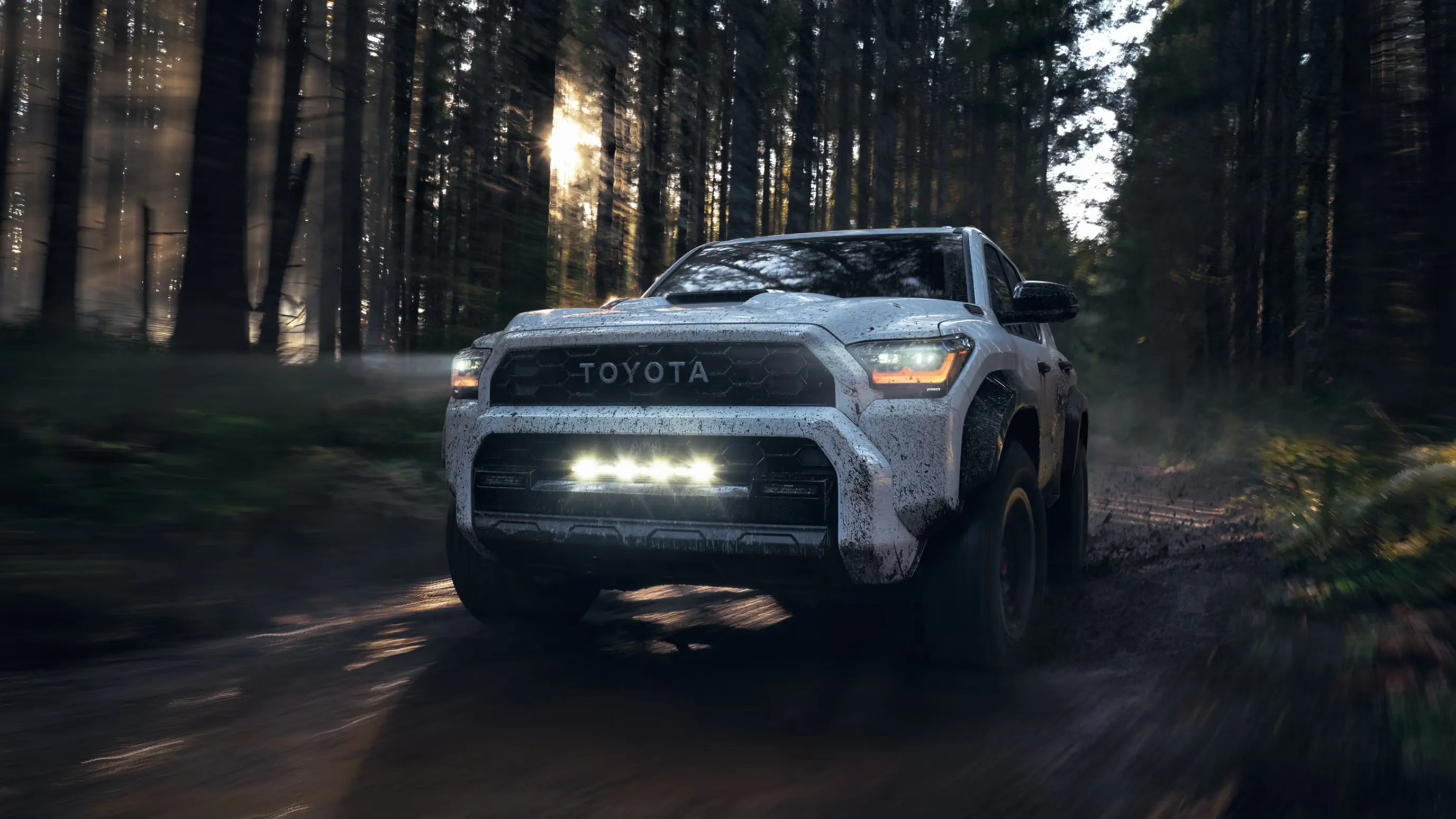
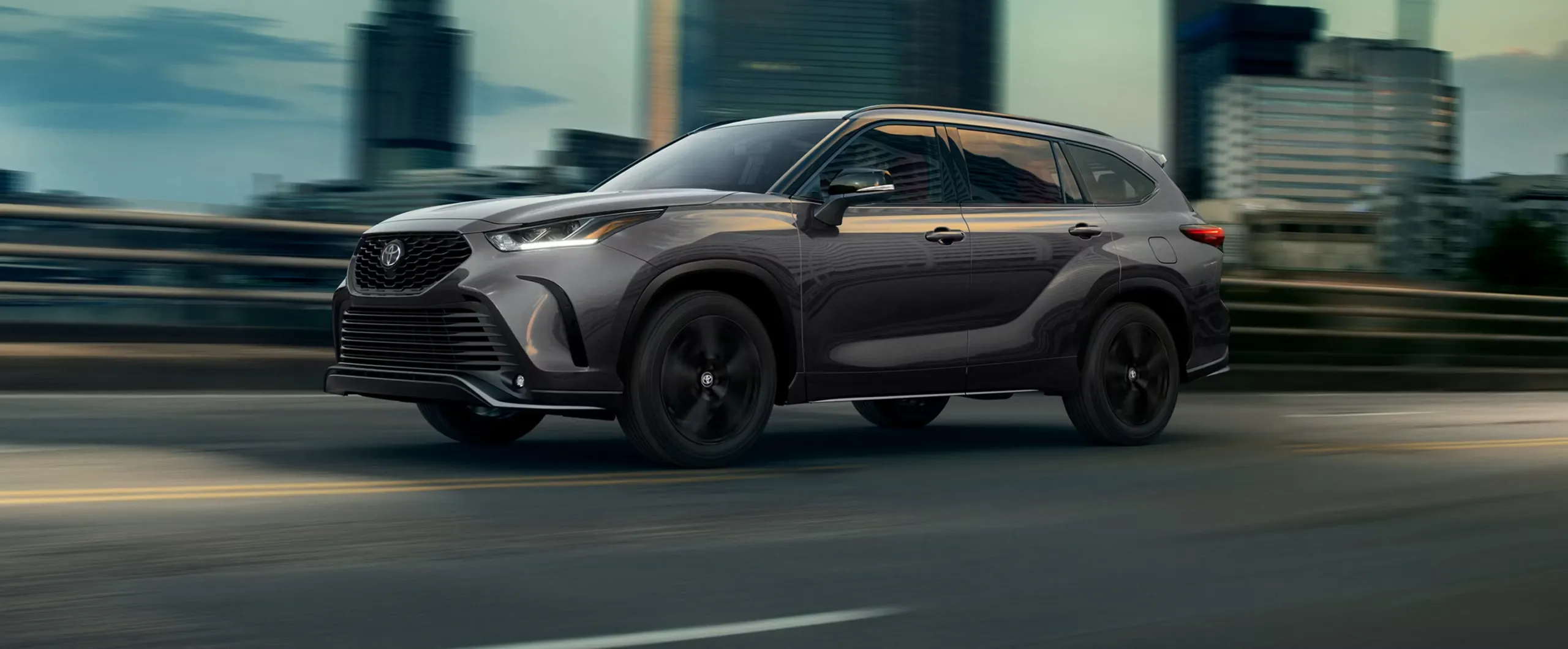
Toyota models frequently achieve top safety ratings from the IIHS and NHTSA, with many earning the highest Overall Vehicle Score. The Tacoma and Tundra exemplify this, combining robust crashworthiness with advanced crash avoidance technology. Toyota’s commitment to reliability ensures strong occupant protection and accident prevention across its lineup.
Browse inventory, book service, and apply for financing all in one place at Toyota of Hollywood — serving Hollywood, Hallandale Beach, Pembroke Pines, Davie, Dania Beach, Miramar, Fort Lauderdale, and all of South Florida.
Toyota safety ratings measure how well a vehicle protects occupants in a crash and how effectively its technology prevents one. Two independent organizations publish those ratings, and each uses a different method.
The National Highway Traffic Safety Administration calculates an Overall Vehicle Score, expressed as a star rating. That score combines the injury probabilities used in frontal and side ratings with a projected probability of injury tied to rollover resistance. A single star total therefore reflects crash performance across multiple scenarios rather than one test.
The Insurance Institute for Highway Safety evaluates two aspects of safety. Crashworthiness describes how well a vehicle protects its occupants in a crash. Crash avoidance and mitigation covers technology that can prevent a crash or lessen its severity. Shoppers reviewing Toyota vehicle safety reviews encounter both measures, and the distinction matters when comparing models.
The NHTSA star rating folds frontal, side, and rollover data into one Overall Vehicle Score. Injury probabilities from frontal and side testing form the base of the calculation. A projected probability of injury based on rollover resistance completes it. A high star total signals strong performance across all three areas, not just one.
IIHS crashworthiness testing measures occupant protection during a collision. Crash avoidance and mitigation forms the second half of the evaluation. That category rates systems that prevent a crash or reduce its severity. Buyers comparing standard driver-assist packages can use this Toyota safety features comparison to see how those systems stack up.
Toyota of Hollywood, located in Hollywood, FL, serves South Florida drivers shopping these ratings in person, with Spanish-language support available for local customers.
The National Highway Traffic Safety Administration (NHTSA) assigns star ratings based on crash-test performance and injury probability calculations. A vehicle’s overall score reflects weighted data that mirrors real-world crash distributions. Shoppers reviewing Toyota Vehicle Safety Reviews encounter two distinct indicators: the star rating and a separate safety concern symbol.
The ⚠ symbol alerts consumers to a government-identified safety issue. That concern can involve structural failure or unintended component performance, such as fuel leakage or a door opening unexpectedly. This warning appears in the relevant crash category and the Overall Vehicle Score area. Critically, the safety concern is not part of the Overall Vehicle Score calculation.
Yes. A vehicle can carry a high star rating while still displaying a safety concern symbol. The two metrics operate independently. The star rating derives from injury probability data. The concern flag highlights a specific defect the government has documented. Buyers who ignore the symbol risk overlooking a known structural or performance flaw, even on a top-rated model.
NHTSA weights the values used in the Overall Vehicle Score calculation. These weights reflect the proportion of real-world injuries associated with each type of crash. Frontal, side, and rollover tests each contribute differently. The final score distills complex crash data into a single, comparable figure. Owners can supplement this information with digital tools. Toyota of Hollywood provides recall checks through its online platform, helping drivers monitor any outstanding safety actions tied to their vehicle.
An IIHS Top Safety Pick signals a vehicle's proven ability to protect occupants during collisions. The Insurance Institute for Highway Safety awards this designation only after rigorous crashworthiness testing. Vehicles without this rating leave families exposed to unknown structural weaknesses during real-world accidents.
The evaluation process examines two distinct safety dimensions. Crashworthiness measures how well a vehicle shields its occupants when a crash occurs. Crash avoidance and mitigation technology assesses systems that prevent collisions entirely or reduce their severity. Missing either component disqualifies a model from top-tier recognition.
IIHS subjects vehicles to multiple controlled impact scenarios. Each test measures intrusion into the passenger compartment and injury risk to occupants. The organization then assigns ratings that reflect real-world survival outcomes.
Toyota Vehicle Safety Reviews consistently highlight models earning Top Safety Pick status. Toyota family vehicles have secured these ratings, delivering proven crash test protection for parents and children alike. The recognition provides objective validation beyond manufacturer claims.
Beyond crash tests, IIHS computes driver death rates for individual models. This metric tracks the number of drivers killed per million registered vehicle years. A low death rate confirms that laboratory protection translates to actual road safety.
The institute also evaluates rear crash prevention technologies. These systems help drivers avoid colliding with other vehicles or fixed objects when traveling in reverse. Strong performance across all categories separates Top Safety Pick winners from merely adequate vehicles.
Toyota’s Highlander, Sienna, and RAV4 deliver the top safety and spaciousness for families. These three models earn the highest marks in Toyota Vehicle Safety Reviews for combining structural crashworthiness with practical interior design. Shoppers who overlook these specific nameplates risk choosing a vehicle that cannot accommodate three child seats across the second row, a critical limitation for growing households.
The best Toyota vehicles for family safety split into two clear categories. Compact crossovers serve smaller households, while three-row SUVs meet the demands of growing ones.
For a family of three or four, the Toyota RAV4 fits the bill among compact crossovers. Its footprint stays city-friendly without sacrificing the occupant protection that defines the segment. Parents gain a vehicle engineered for daily commutes and weekend trips alike.
Three car seats fit across the second row in Toyota’s best family vehicles for safe travel. The Highlander and Sienna both offer this configuration, eliminating the need to stagger children between rows. That width translates directly into fewer blind spots for the driver and easier access for buckling harnesses.
| Model | Category | Key Safety Advantage |
|---|---|---|
| Toyota RAV4 | Compact crossover | Ideal for families of three or four |
| Toyota Highlander | Three-row SUV | Three car seats across second row |
| Toyota Sienna | Minivan | Three car seats across second row |
Toyota of Hollywood pairs extensive inventory with digital shopping features such as virtual test drives. Buyers can evaluate these three models side by side before visiting the lot, comparing rear-seat width and crash-test results from the comfort of home.
Matching the vehicle to the household comes first, and safety technology and cabin space follow from that choice. Family size determines the answer more than any single spec sheet, so a careful comparison begins with seating needs rather than star ratings alone.
Shoppers evaluating Toyota Vehicle Safety Reviews benefit from a structured approach. The table below outlines the sequence that keeps priorities in order.
| Step | Question to Ask | Why It Matters |
|---|---|---|
| 1 | How many passengers travel regularly? | Seating capacity narrows the field first |
| 2 | Which driver-assist features are standard? | Crash avoidance technology varies by model |
| 3 | Does the cabin fit car seats and cargo? | Space supports safe, everyday use |
| 4 | How is the vehicle maintained over time? | Serviced systems perform as designed |
Ratings summarize crash performance, yet they do not measure whether a vehicle fits a particular family. A model with strong scores can still fall short if the second row cannot hold three car seats. Household needs therefore anchor the comparison, and ratings refine the shortlist.
Safety systems depend on proper care. Toyota of Hollywood provides factory-trained service with genuine Toyota OEM parts, which keeps driver-assist sensors and braking components operating to specification. The dealership serves drivers across South Florida, including Fort Lauderdale, Hollywood, Pembroke Pines, Hialeah, and Miami.
They measure how well a vehicle protects occupants in a crash and how effectively its technology prevents one, using methods from two independent organizations: NHTSA and IIHS.
It combines frontal, side, and rollover injury probability data into one star rating, reflecting crash performance across multiple scenarios rather than a single test.
It measures occupant protection during a collision, while crash avoidance and mitigation covers technology that prevents a crash or lessens its severity.
Safety ratings provide the objective foundation for a family vehicle decision, yet the correct choice emerges only when those scores are matched against household seating needs. A family of four finds its answer in the RAV4, while the Highlander and Sienna deliver the second-row width that growing households require. Shoppers should use these ratings to refine their shortlist, then verify that the chosen model accommodates their daily passengers and cargo before committing to a purchase.
 EN
 ES
