


Toyota's safety reputation rests on the Toyota Safety Sense suite, standard across most models. The suite includes pre-collision warning with pedestrian detection, lane-departure alert, and adaptive cruise control. Many models also earned the Insurance Institute for Highway Safety's Top Safety Pick award, confirming robust crash protection and advanced driver-assistance technology.
Browse inventory, book service, and apply for financing all in one place at Toyota of Hollywood — serving Hollywood, Hallandale Beach, Pembroke Pines, Davie, Dania Beach, Miramar, Fort Lauderdale, and all of South Florida.
Toyota Safety Ratings reflect a comprehensive approach combining active driver-assistance technology, structural crash protection, and independent testing by organizations like the IIHS. These ratings are not a single metric. They represent a vehicle's performance across multiple crashworthiness and crash-prevention evaluations.
The Insurance Institute for Highway Safety (IIHS) awards two designations. The Top Safety Pick has been awarded since the 2006 model year. The stricter Top Safety Pick+ was inaugurated in 2013. Vehicles that perform best in IIHS evaluations qualify for these awards. They identify the best safety choices within size categories during a given year.
Larger, heavier vehicles generally afford more protection than smaller, lighter ones. A small car that qualifies for an award might not protect its occupants as well as a bigger vehicle that does not earn the award. South Florida drivers weighing options should consider this physical reality. Daily commutes on I-95 and the Turnpike make structural mass a practical safety factor.
The IIHS criteria demand good ratings in multiple tests. These include the driver-side and passenger-side small overlap front tests. The original moderate overlap front test is also required. This multi-directional testing simulates real-world collision angles. It pushes manufacturers to strengthen vehicle cages beyond simple head-on protection.
Toyota of Hollywood serves drivers across South Florida, including Hollywood, Fort Lauderdale, and Miami. For these customers, understanding how active systems like Toyota Safety Sense integrate with structural engineering is essential. The ratings distill complex engineering into a clear, independent benchmark. Shoppers gain a reliable shortcut for comparing protection levels across different models and size classes.
Toyota Safety Sense 3.0 represents the latest generation of the brand's standard active safety suite. This generation marks a significant evolution in Toyota's safety engineering, with the advanced system now protecting drivers across the lineup. Even entry-level models receive the brand's newest protective features. The Toyota Corolla Sedan, for example, revs up power, safety, and tech in one accessible package. Families and commuters who skip this technology lose a layer of collision avoidance that previous generations simply did not offer.
The system bundles several active safety technologies as standard equipment. A pre-collision system with pedestrian detection scans the road ahead and warns of potential frontal impacts. Lane departure alert with steering assist helps prevent unintentional drifting. Dynamic radar cruise control maintains a set distance from vehicles ahead at highway speeds. Road sign assist reads and displays speed limits and other signage on the instrument panel. Automatic high beams toggle between high and low beams when oncoming traffic appears. These features work together to create a protective cocoon around the vehicle.
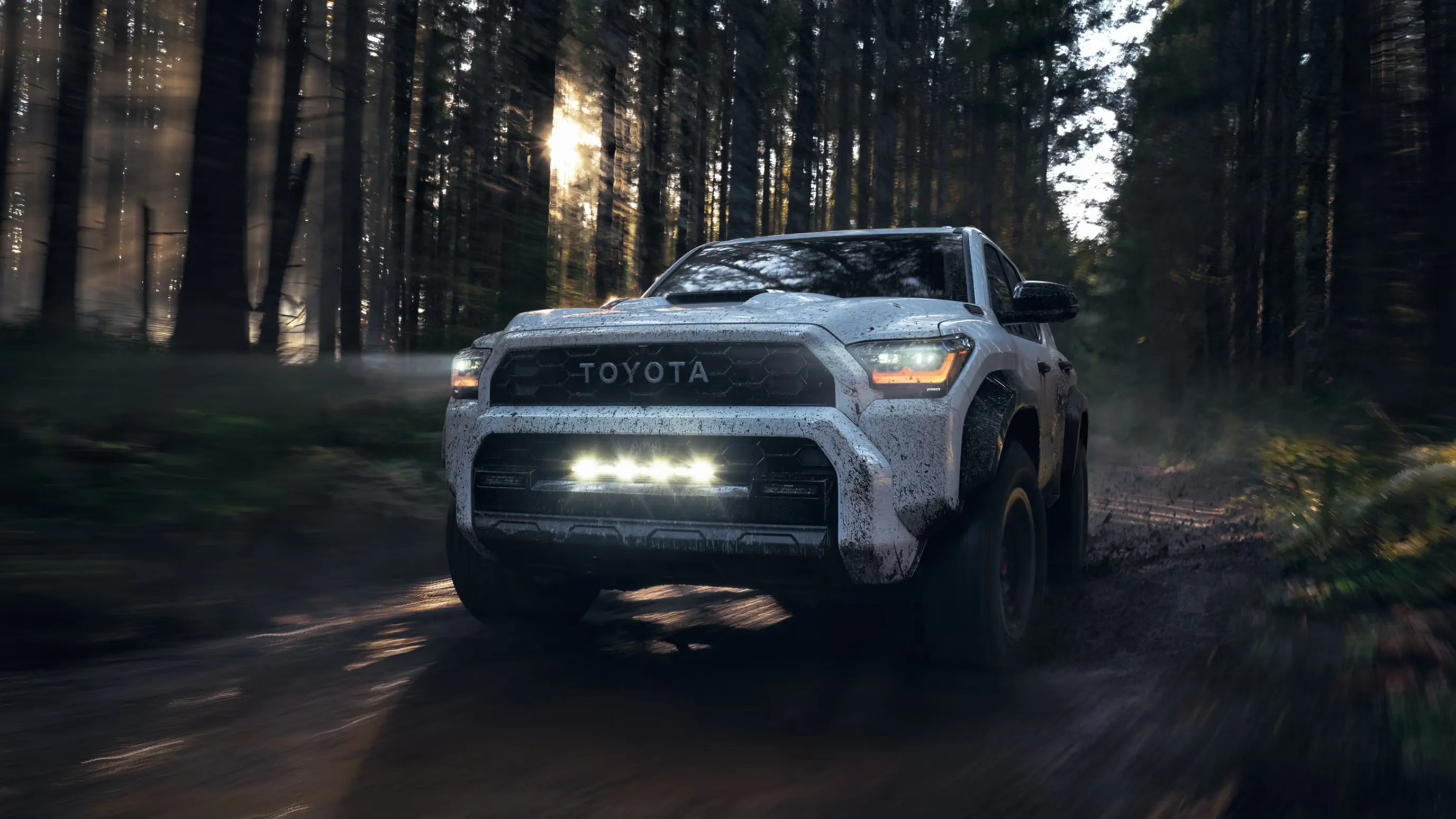
Toyota applies its safety philosophy across all body styles. The Tacoma and Tundra pickups combine power with safety, blending off-road ready engineering with city-street agility. The Tacoma pairs its powertrain with the brand's safety systems as standard equipment. A truck buyer sacrifices nothing in protection when choosing capability. The same sensor suite and intervention logic that guard a Corolla driver also shield the driver of a full-size Tundra.
Toyota Safety Ratings depend on a demanding series of crash tests conducted by the Insurance Institute for Highway Safety (IIHS). Vehicles must earn top marks across multiple evaluations to qualify for the highest award. Missing even one threshold disqualifies a model from recognition. The IIHS designed these tests to simulate the most common and severe real-world collisions.
The IIHS mandates good ratings in three distinct frontal crash tests. The driver-side small overlap front test replicates a collision where only the front corner strikes an object. The passenger-side small overlap front test applies the same rigor to the right side of the vehicle. The original moderate overlap front test evaluates structural integrity when more of the front end absorbs the impact. A vehicle must achieve a good rating in all three to advance.
Side-impact protection faces a stricter standard. The updated side test uses a heavier barrier moving at a higher speed. A good rating in this test is non-negotiable for the top award. Headlight performance also plays a decisive role. Acceptable or good headlights must come as standard equipment on the vehicle. Models offering superior illumination only as an optional upgrade do not meet the criteria.
The IIHS criteria extend beyond occupant protection. An advanced or superior rating for daytime vehicle-to-pedestrian front crash prevention is required. This system must detect and respond to pedestrians automatically. Vehicles lacking this technology or scoring only a basic rating cannot earn the highest safety designation. The requirement reflects a growing focus on protecting everyone on the road, not just those inside the car.
The Toyota Safety Ratings reflect a foundation built on the Star Safety System. This integrated suite of active technologies works continuously to help drivers maintain control. It is not a feature reserved for emergencies. The system operates in the background during every commute and errand.
The system bundles several core functions into one seamless package. Vehicle Stability Control helps correct understeer or oversteer by adjusting engine power and braking individual wheels. Traction Control limits wheel spin during acceleration on wet or uneven pavement. Anti-lock Brakes prevent wheel lockup under hard braking, preserving steering ability. Electronic Brake-force Distribution balances braking pressure between front and rear axles. Smart Stop Technology automatically reduces engine power when both accelerator and brake pedals are pressed simultaneously.
Sudden rainstorms create slick roads across Hollywood and surrounding areas. The system’s traction and stability functions engage instantly when sensors detect wheel slip. Commuters on I-95 encounter stop-and-go traffic where panic braking occurs without warning. Anti-lock Brakes and brake-force distribution keep the vehicle stable during these abrupt stops. The technology does not require driver activation. It monitors conditions and intervenes in milliseconds.
Toyota is a brand synonymous with reliability, and that reputation extends to the consistent operation of its safety technologies. The Star Safety System underpins the brand’s approach to active safety across the lineup. A factory-trained service team uses genuine Toyota OEM parts for repairs. This practice ensures that safety systems remain in proper working order after collision or mechanical service. Drivers lose a critical layer of protection when these components are not maintained to factory specification.
The Toyota lineup delivers strong crash protection and advanced driver-assist technology across the lineup. Toyota Safety Ratings reflect rigorous testing by the Insurance Institute for Highway Safety (IIHS), which awards Top Safety Pick and Top Safety Pick+ designations to vehicles that perform best in evaluations. These awards identify the best vehicle choices for safety within size categories during a given year. Shoppers can compare models directly using this framework.
The IIHS evaluates vehicles through multiple crashworthiness tests. The IIHS criteria for Top Safety Pick+ require good ratings in the driver-side and passenger-side small overlap front tests. The original moderate overlap front test also demands a good score. These assessments simulate real-world collision scenarios that challenge a vehicle's structural integrity and restraint systems.
Size remains a critical factor. Buyers should weigh crash-test results alongside vehicle class when assessing overall protection.
Toyota of Hollywood maintains a large selection of new Toyota models and a wide range of used and certified pre-owned vehicles. This inventory allows shoppers to compare safety features across different model years and generations. The dealership's knowledgeable sales team guides customers through the latest lineup so they find the right fit for their goals. Understanding how Toyota models perform on safety helps families and commuters make informed decisions without overlooking the role of vehicle size.
Toyota Safety Sense 3.0 is the latest generation of Toyota's standard active safety suite, bundling pre-collision warning with pedestrian detection, lane-departure alert, and adaptive cruise control across the lineup.
Many Toyota models earned the Insurance Institute for Highway Safety's Top Safety Pick award, confirming robust crash protection and advanced driver-assistance technology.
The IIHS criteria require good ratings in driver-side and passenger-side small overlap front tests, plus the original moderate overlap front test, simulating real-world collision angles.
Safety in a Toyota rests on a layered approach: structural integrity proven through rigorous crash tests, standard advanced driver-assist technology, and the always-active Star Safety System. These elements work together to protect occupants and pedestrians alike. For South Florida drivers, this translates to confidence on rain-slicked roads and in heavy traffic. Reviewing IIHS award criteria alongside vehicle size gives any shopper a clear framework for selecting a model that meets their family’s protection needs.
 EN
 ES
